iCoachMath
STEM Excellence Series: Empowering the Next Generation
NEGATIVE EXPONENT
NEGATIVE EXPONENT
Definition Of Negative Exponent
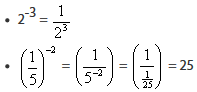
A Negative Exponent of a number equals to the reciprocal of positive exponent of the number. For instance 
More About Negative Exponent
Negative exponents are used in scientific notation to designate a number smaller than one.
Video Examples: Negative exponents
Examples of Negative Exponent
Solved Example on Negative Exponent
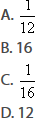
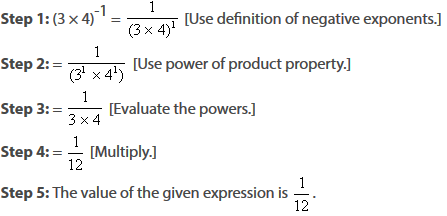
Ques: Evaluate the expression (3 × 4)-1.
Choices:
Solution:
Quick Summary
- A negative exponent means the base is in the wrong place (numerator vs denominator).
- To simplify, move the base with the negative exponent to the other part of the fraction (numerator or denominator) and make the exponent positive.
- Any number (except 0) raised to the power of -1 is its reciprocal.
\[ x^{-n} = \frac{1}{x^n} \]
🍎 Teacher Insights
Use visual aids like fraction models to show the relationship between positive and negative exponents. Emphasize that negative exponents do *not* result in negative numbers.🎓 Prerequisites
- Basic arithmetic
- Understanding of fractions
- Positive exponents
Check Your Knowledge
Q1: Simplify: 4-2
Q2: Simplify: (1/2)-1
Frequently Asked Questions
Q: What happens when the base is zero?
A: Zero raised to any negative power is undefined because it would involve division by zero.
Q: Can the exponent be a fraction?
A: Yes, negative fractional exponents are possible. For example, x^(-1/2) = 1 / sqrt(x).